Next Generation Service Corps Internships
In order to link the academic curriculum with real-world experience, NGSC and AFCT members complete one internship in each of the public, private, and nonprofit sectors throughout their time at the university.
WHAT IS AN INTERNSHIP?
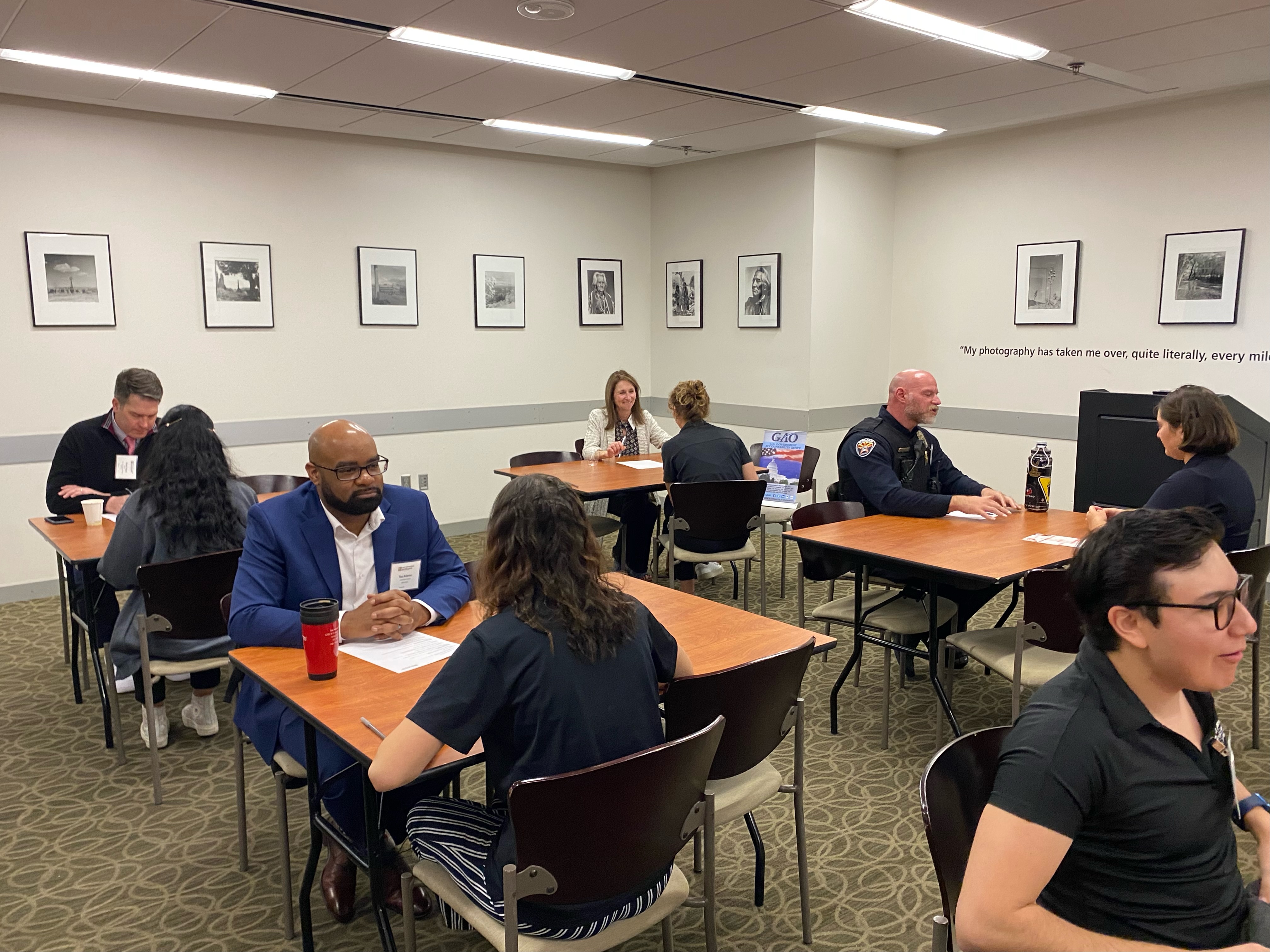
An internship is a planned, short-term learning experience that allows students to take the knowledge and skills learned in the classroom and apply them in a professional work setting. Internships offer students the opportunity to learn from professionals and explore potential career options in a wide-variety of disciplines and industries.
An internship should be recognized as a professional development opportunity where the student is directly supervised and mentored by a staff member at the organization. Interns are given responsibilities beyond basic administrative or clerical tasks and focus on more project-based experiences.


INTERNSHIP BENEFITS
- Gain hands-on experience that deepens what you've learned in the classroom, including the strengths, weaknesses, and values of each sector.
- Learn about your chosen career field.
- Expand their network.
- Gain exposure to career paths they may not have previously considered.
- Develop new skills and attain experience that will make them more competitive for future employment and continuing education.
INTERNSHIP PARAMETERS
Because Next Generation Service Corps and AFCT members have a wide variety of backgrounds and interests, the parameters for internships are necessarily broad to ensure that students can seek out opportunities that both fit within and augment their academic and career plans.
All NGSC and AFCT-eligible internships must allow students to:
- Observe the values of the organization and, by extension, the sector in which it exists;
- Be intertwined in the day-to-day operations of the organization or company;
- Explore and understand the decision-making processes of that organization from an insider's perspective; and
- Serve a minimum of 70 hours.

TIME COMMITMENT
Students must serve a minimum of 70 hours at their internship. Students' internship experiences should allow them to spend significant amounts of time within the organization so they are able to be immersed in that organization's culture.
COMPENSATION
Unpaid internships in the public sector and for nonprofit charitable organizations, where the intern volunteers without expectation of compensation, are generally permissible. However, we strongly support paid internships to allow participation by an economically diverse student population who might not be able to accept an unpaid internship.
In the private sector, the rate of pay for students must be at least federal, state, or local minimum wage (calculated over any time scale - hourly, weekly, semi-monthly, monthly or annually).a
FINDING AN INTERNSHIP
We utilize Handshake as our primary way of connecting students with internships. This both protects our students (by ensuring internships are properly vetted through the University) and exposes them to a larger number of opportunities. Handshake is made available to all ASU students at no cost and is an invaluable resource. We encourage all NGSC and AFCT students to establish a Handshake account at the start of their ASU experience and to make use of the many resources available through our partners at ASU Career Services.
STUDENT LEARNING
NGSC and AFCT Members will complete a Values and Reflection Assignment at the end of their internship to transform their experiences into genuine learning and enhance their ability to assess their own values, goals, and progress. Students are responsible for completing this assignment and will submit it directly to program staff.